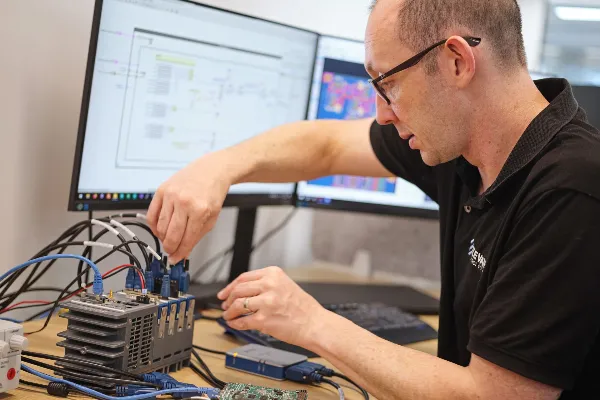


Elevate Controls offers full-cycle development of embedded controllers. Our consistent development process adapts to the unique requirements of your project and ensures a quality outcome every time. We use industry standard tool chains that ensure efficient use of resources, and design protect to allow for future variation and scalability.
Background: Modernising the Locomotive Train Line Interface
The Train Line is a multi-wire cable that carries control signals between locomotives in a multi-unit train. The interface to the Train Line is traditionally analog, via a large footprint panel of levers and switches. There is typically one Train Line interface per locomotive on a multi-locomotive train
Our client engaged us to develop a fully digital Train Line interface which extended the standard analog interface functions to include real-time signal monitoring and diagnostics.
The Challenge: Delivering More capability in Less Space
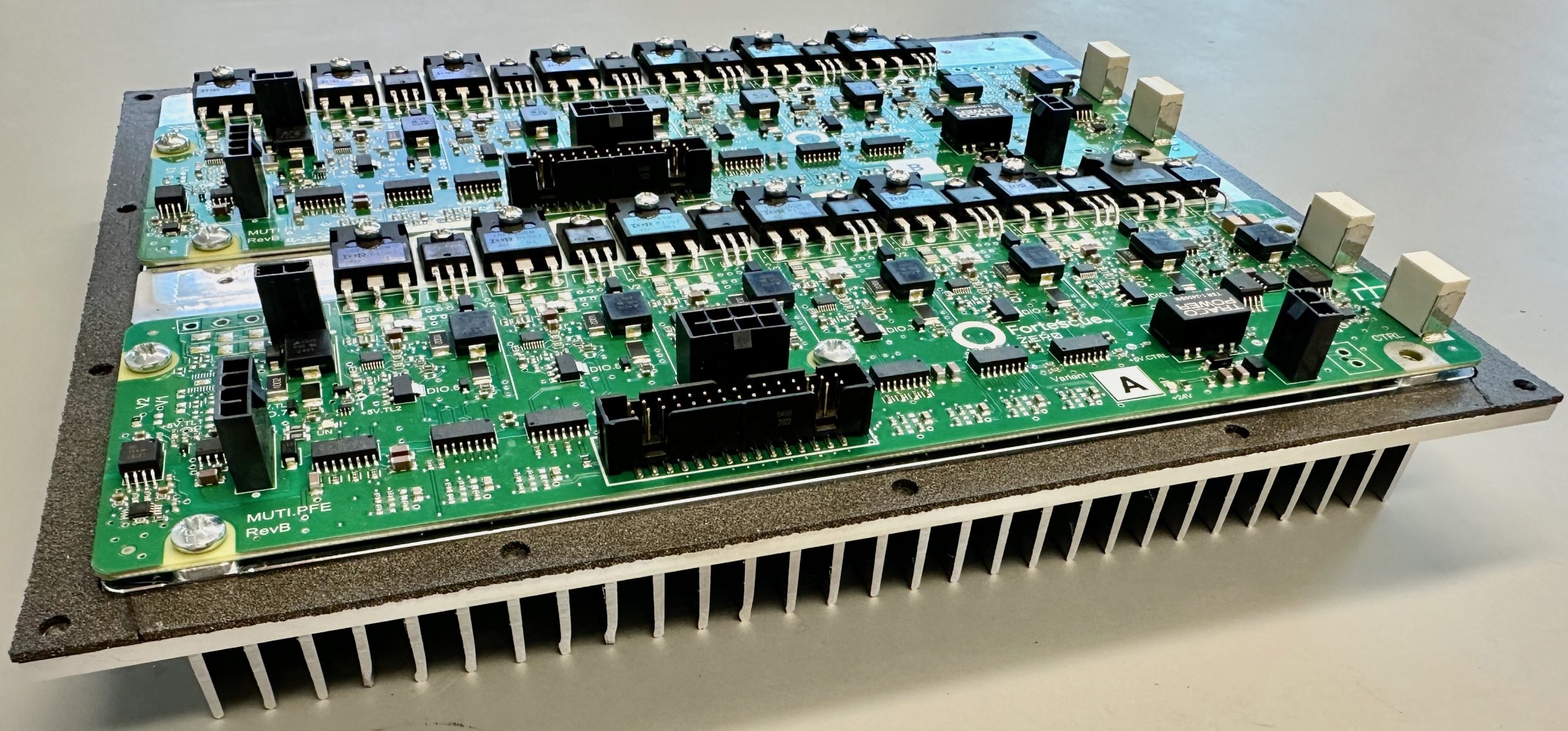
The client required a plug-and-play replacement interface which delivered more functionality in a significantly smaller footprint. The interface needed to:
- Safe, reliable switching of high current, high voltage signals in a demanding EMI environment.
- Offer high-resolution analog IO to 74V
- Support bidirectional signals on all lines
- Disperse generated heat energy while in a high ambient temperature environment
The Solution: A Digital Train Line Interface with NI sbRIO Control
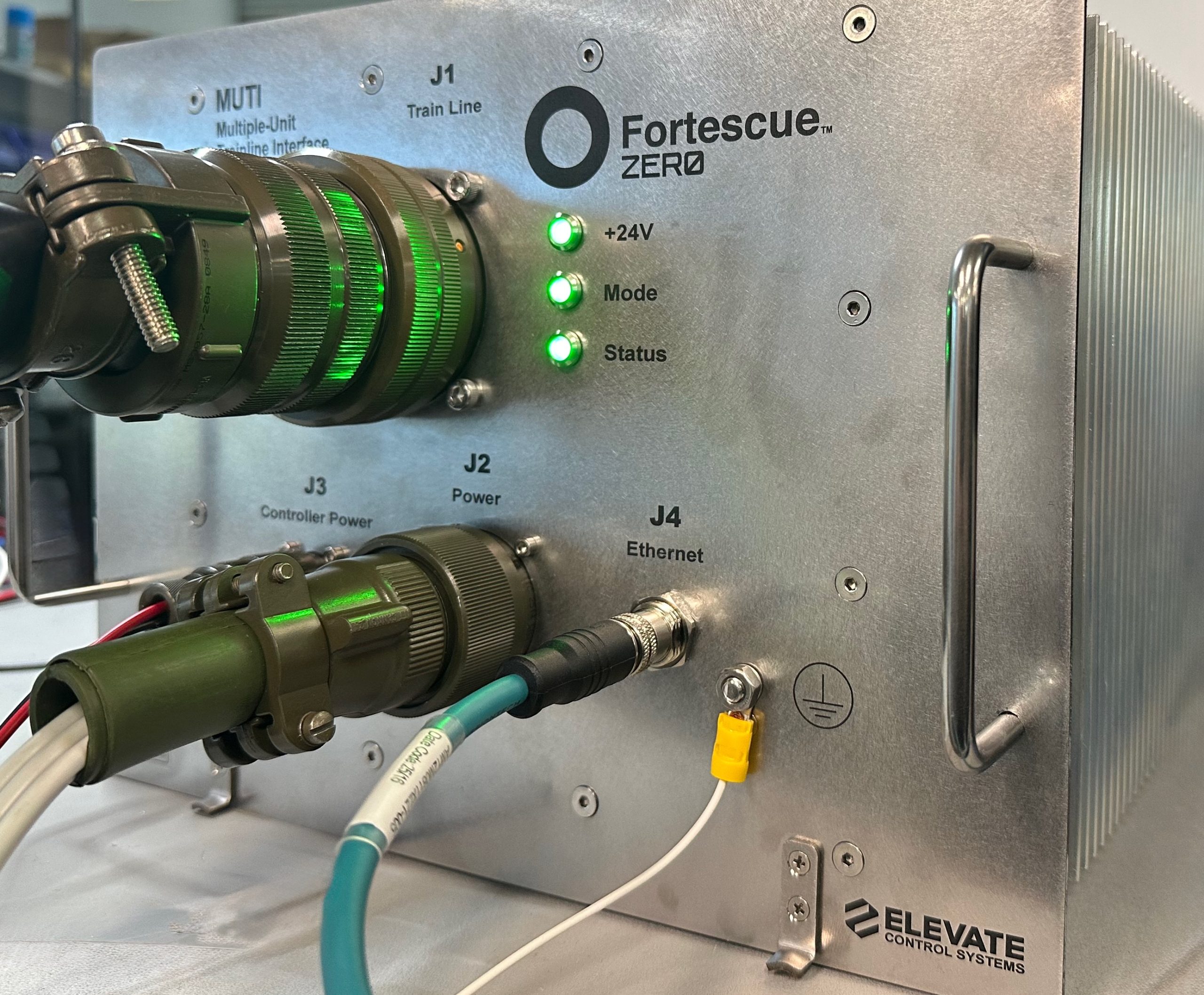
The interface was built around a custom housing designed to manage heat load and EMI, with support for standard locomotive mounting and racking. It used Ethernet to exchange commands and measurements with the locomotive controller.
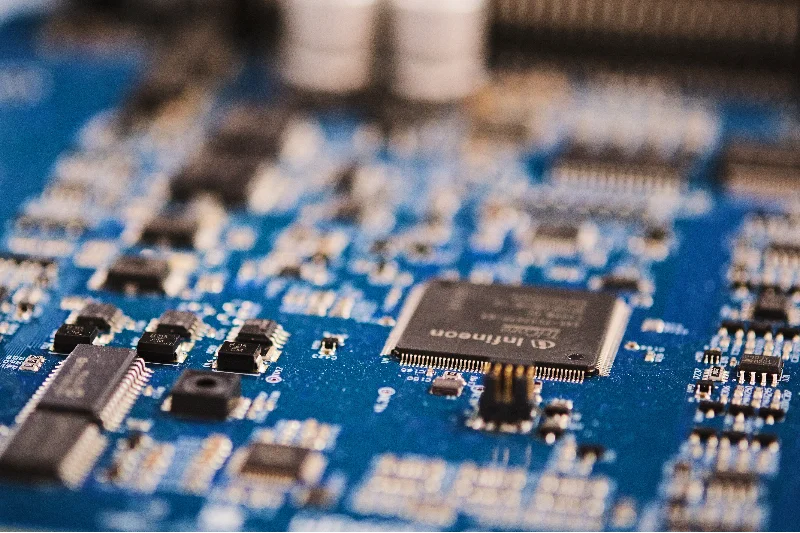
Operational functions were managed with a Commercial-off-the-Shelf (COTS) National Instruments (NI) sbRIO controller, with custom PCBs for signal conditioning and signal routing.
The Outcome: A Compact Digital Train Line Interface for Rail Operators
Elevate Controls’ met a demanding time-to-market schedule to deliver a ready-to-deploy final product suited to medium level production volumes. The interface design included self-test functionality that allowed production units to be validated by reference to a second interface.